llms.txt for AI Agents: The Confirmed Facts, Not the Hype
Published: September 2026 · Last updated: September 2026 — this topic evolves monthly as AI vendors clarify their crawling policies.
1. The Autonomous Agent Shift: What llms.txt Actually Is (and Isn't)
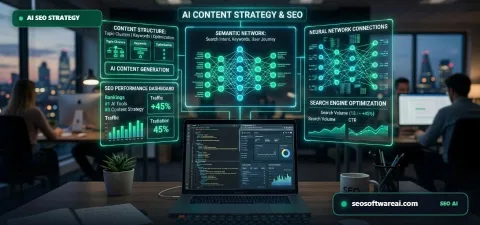
Between 2020 and 2024, web architecture was heavily optimized for human visual consumption — rich React SPAs, complex interactive widgets, heavy CSS frameworks, and dynamic JavaScript hydration. In 2026, a growing share of web requests come from AI agents and coding tools rather than humans clicking through a browser — tools like Cursor, GitHub Copilot, and various LLM-powered research assistants.
One proposed response to this shift is /llms.txt, a plain Markdown file placed at a site's root. It was introduced as a community proposal by Jeremy Howard (co-founder of Answer.AI and fast.ai) on September 3, 2024, published at llmstxt.org. It is important to be precise about what this is: it is not a W3C or IETF standard, and no major search engine or AI lab has committed to reading it as part of production ranking or answer systems. Howard's original problem statement was narrower than how it is often marketed today — he was addressing context-window limits for AI coding tools parsing developer documentation, not visibility in generative search.
Google's own search team has been unusually direct about this. John Mueller has publicly compared llms.txt to the deprecated keywords meta tag, calling it “purely speculative for now,” and Gary Illyes confirmed in 2025 that Google does not support it and has no plans to. When an llms.txt file briefly appeared on one of Google's own developer-docs properties, Mueller clarified on the record that this was not an endorsement.
OpenAI has not publicly committed to reading llms.txt in production either, and generally directs site owners toward standard robots.txt directives for controlling crawler access. The two genuine, documented exceptions are Anthropic, which publishes and maintains its own llms.txt for its developer documentation as a way to give coding assistants a structured entry point into its API docs, and Perplexity, which has indicated it retrieves llms.txt files where present. These two cases are real and worth acting on if search visibility with Claude or Perplexity specifically matters to your business — they are not evidence of broad industry adoption.
The practical takeaway: publishing an llms.txt file is a low-cost, optional step with a confirmed (if narrow) benefit for Anthropic/Claude-related and Perplexity-related traffic, and an unconfirmed effect everywhere else. It is not something every site needs, and it should not be marketed as a ranking lever.
2. Anatomy of the /llms.txt and /llms-full.txt Convention
Where a site chooses to publish one, the file is placed in the root directory of the domain (e.g., https://yourdomain.com/llms.txt), formatted similarly in spirit to robots.txt or sitemap.xml, though with no formal parsing guarantee from any crawler.
The Structure Recommended by the Original Proposal:
- Title & Mission Header: A clear, brief declaration of what the site or product is.
- Core Capabilities (Brief Summary): 2–3 paragraphs describing supported features, APIs, and use-cases.
- Curated Link Hierarchy (Markdown Links): Relative or absolute links to clean
.mdendpoints categorized by functionality. - Optional Full Manifest (/llms-full.txt): A concatenated plain-text file containing fuller documentation content for single-pass ingestion by tools that choose to use it.
3. Engineering a Dynamic Markdown Content-Negotiation Pipeline
Independent of the llms.txt debate, serving a clean Markdown representation of a page — on request, via content negotiation — is a reasonable engineering pattern for reducing token overhead for any tool that does choose to fetch it, whether that's a coding assistant, a documentation crawler, or a script a developer wrote themselves. Rather than maintaining duplicate .html and .md file trees in your repository, this can be implemented via HTTP Content Negotiation at the edge or within the backend controller.
When a tool (like curl, a coding agent, or a LangChain WebBaseLoader) requests a URL with Accept: text/markdown, the server bypasses the HTML template and returns clean Markdown directly from the database model:
<?php
namespace App\Http\Controllers;

use Illuminate\Http\Request;
use App\Models\Frontend;
use League\HTMLToMarkdown\HtmlConverter;

class BlogController extends Controller
{
    public function show(Request $request, $slug)
    {
        $article = Frontend::where("data_keys", "blog.element")
            ->whereJsonContains("data_values->slug", $slug)
            ->firstOrFail();

        $acceptHeader = $request->header("Accept", "");

        if (str_contains($acceptHeader, "text/markdown") ||
            str_contains($acceptHeader, "text/plain") ||
            $request->query("format") === "md") {

            $converter = new HtmlConverter([
                "strip_tags" => true,
                "header_style" => "atx",
                "hard_break" => true
            ]);

            $rawHtml = $article->data_values->description ?? "";
            $markdownContent = "# " . ($article->data_values->title ?? "") . "

";
            $markdownContent .= "> Canonical URL: " . route("blog.details", $slug) . "

";
            $markdownContent .= $converter->convert($rawHtml);

            return response($markdownContent, 200, [
                "Content-Type" => "text/markdown; charset=UTF-8",
                "X-Robots-Tag" => "all",
                "Cache-Control" => "public, max-age=86400",
                "Vary" => "Accept"
            ]);
        }

        return view("templates.basic.blog_details", compact("article"));
    }
}
4. Four Practical Traps in Agent-Facing Content Delivery
Trap 1: Client-Side Hydration Wall
Single Page Apps (SPAs) built in CSR React/Vue return an empty <div id="root"></div> to standard HTTP scrapers. Unless a given tool expends compute spinning up a headless Chromium instance, documentation remains invisible to it. Server-Side Rendering (SSR) or dynamic edge HTML generation avoids this regardless of which specific agents end up mattering to your traffic.
Trap 2: Interactive Widget Data Concealment
Pricing calculators, code playground tabs, and API sample accordions require user interaction (clicks) to render data into the DOM. Simple scrapers typically ingest only the active first tab. Exposing all variant code snippets simultaneously within structured <pre><code> blocks avoids this regardless of the reader.
Trap 3: Token Bloat from Navbars and Mega-Menus
A standard enterprise web page can easily contain tens of thousands of characters of headers, footers, tracking pixels, SVGs, and cookie consent modals relative to the actual content. Using semantic HTML5 <main> tags helps any parser find the substantive content. Optionally, sites can also advertise a Markdown alternative in the page <head> — this is a voluntary good practice, not part of any officially adopted standard:
<link rel="alternate" type="text/markdown" href="https://seosoftwareai.com/blog/article-slug?format=md" title="Markdown Representation">Trap 4: Broken Relative Links in Agent Scratchpads
When a tool ingests a document and follows a relative link [Authentication](/docs/auth), an isolated execution sandbox may lose the parent origin context. Enforcing absolute URLs in any generated Markdown avoids this class of failure.
5. Architectural Comparison: Content-Delivery Approaches
| Approach | Target Consumer | Primary Benefit | Confirmed Adoption | Implementation Barrier |
|---|---|---|---|---|
| /llms.txt | AI coding tools & select agents | Curated content index, if the consumer reads it | Confirmed only for Anthropic/Claude and Perplexity; unconfirmed elsewhere | Minimal (single static or dynamic file) |
| Schema.org @graph JSON-LD | Search Engine Knowledge Graphs | Deterministic entity & attribute linking | Confirmed, widely used by Google and other search engines | Moderate (Requires CMS data modeling) |
| Accept: text/markdown | Direct API scrapers & developer tools | Reduces DOM parsing & CSS noise for tools that request it | Depends entirely on the requesting client choosing to ask for it | Low-Medium (Requires server middleware) |
| XML Sitemaps | Search Engine Indexing Bots | Discovers URL updates and lastmod timestamps | Confirmed, standard practice honored by Google, Bing, and others | Low (Standard SEO practice) |
| Raw HTML + Browser Rendering | Human browsers & most crawlers, including Common Crawl | Full visual & CSS styling; the format nearly all crawlers actually parse | Confirmed as the dominant real-world format | Native Default |
6. Illustrative Scenarios: Agent-Facing Delivery Failures
The two scenarios below are illustrative, hypothetical examples meant to demonstrate a general failure pattern — they are not documented case studies from a named company, and no specific metrics from them should be read as verified real-world data.
Scenario A: The JavaScript-Locked API Reference
The Scenario: A documentation platform renders all API endpoint schemas entirely client-side. Coding assistants attempting to read the docs receive an empty DOM shell and, lacking real parameter names, may generate plausible-looking but incorrect parameter names in generated code.
The Resolution: Serving pre-rendered HTML (via SSR) or a Markdown alternative via content negotiation for tools that request it eliminates this class of failure, independent of whether any particular agent is reading an llms.txt file.
Scenario B: The Cookie Consent Modal Occlusion
The Scenario: A site injects a full-screen cookie consent dialog with inline blocking JavaScript. A simple text-based crawler that doesn't execute JavaScript may receive only the modal's text and conclude the page has no substantive content.
The Resolution: Refactoring cookie banner scripts to execute asynchronously, without blocking server-side HTML rendering, ensures the underlying content is still present in the initial response for any parser that doesn't run JavaScript.
Frequently Asked Questions
Will providing a /llms.txt file cause duplicate content penalties with Google Search?
No. Where implemented alongside proper canonical tags (<link rel="canonical">) and standard Vary: Accept HTTP headers, serving a Markdown alternative does not create a duplicate-content issue in Google Search.
What is the optimal character-to-token ratio for Markdown documentation?
In clean English technical Markdown, 1 token roughly corresponds to 3.8 to 4 characters. A concise, 2,000-word documentation page converts to approximately 2,600 tokens, fitting comfortably within the context budget of most retrieval pipelines.
How can I verify that AI agents are discovering my /llms.txt file?
Inspect your server access logs (or a service like Cloudflare Analytics) and filter requests for /llms.txt and /llms-full.txt by User-Agent strings such as GPTBot, ClaudeBot, Claude-User, Claude-SearchBot, and PerplexityBot. Set expectations accordingly: an independent analysis of 137,000 domains found that 97% of published llms.txt files received zero crawl requests, and that AI-agent traffic of any kind made up roughly 1% of total requests across the sample. Most sites that publish the file should expect very little of this traffic, not a guaranteed or heavy crawl.
Do search engines still respect the changefreq and priority sitemap tags?
This is a separate, unrelated protocol from llms.txt — see our dedicated guide on dynamic XML sitemap engineering for that topic.